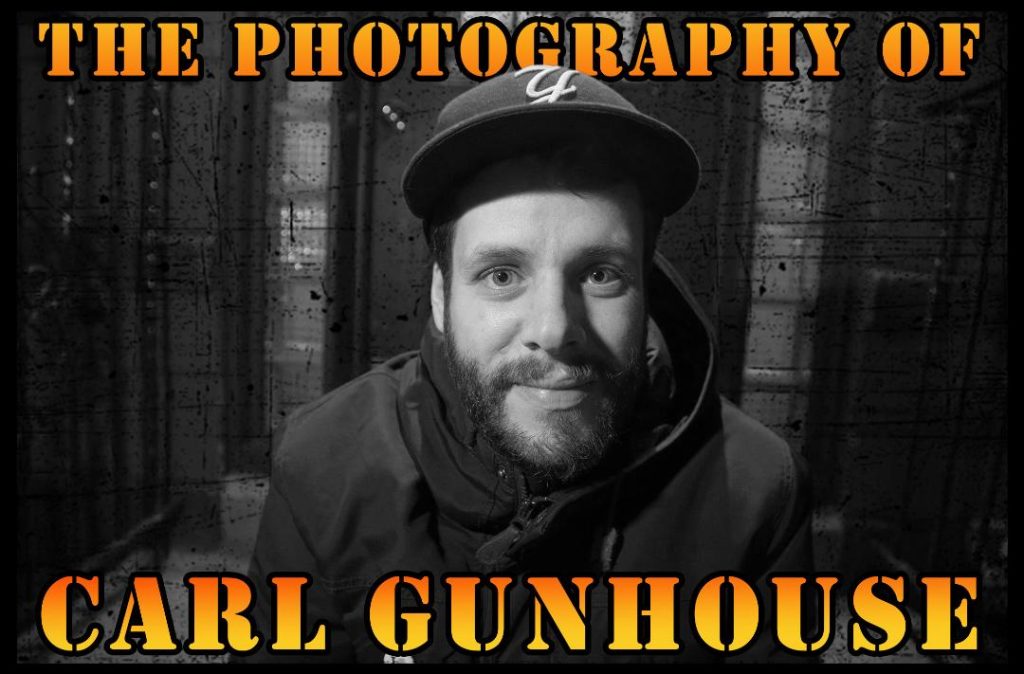
I don’t recall my first in person interaction with photographer Carl Gunhouse but my guess would be it happened either in or outside of a early to mid-90’s hardcore matinee at CBGB’s. Over the years Carl has been a solid contributor to the hardcore scene through his photography and has an amazing knack for showing up to a show you would never have expected him to be at including Long Island VFW’s or New Jersey basement shows. In pursuing this interview I found out he has even traveled as far away as Colombia and Japan to shoot hardcore shows. He is consistent and has a certain style that I can almost pick out automatically and I love his simple approach to photography. Like many photographers within the hardcore scene we need to show him more love. When I found out he had just put out a new book covering his hardcore AND underground wrestling photography called “Men” I thought it was a great time to finally pull the trigger and ask him a few questions. Carl answered these questions in early March of 2026. Lead photo by: Carl. Graphics by: Jon Contra.
IE: Hey Carl, where exactly are you right now and what would you usually be doing at this time of the day if you weren’t answering these questions?
Carl: It is Friday at 12:30PM and I am on my couch in Greenpoint, Brooklyn. I have a cat sleeping behind me, just back from the gym, and about to head out to a union meeting in NJ. Usually about this time I am doing the same thing but editing pictures or doing some grading while watching TV.
IE: For those who don’t know you can you give us a bit of an introduction as to when you started going to hardcore shows and what made you want to take photographs at hardcore shows?
Carl: I started going to indie rock (or at the time alternative shows) in 1992, when I turned 16. At that age, my parents let me go into the city by myself, and I could get into 16-and-over shows which were a thing back then. In April of 1993, I saw Sick Of It All, Biohazard and Sheer Terror at City Gardens in Trenton because an older kid in my high school math class said, “You haven’t moshed unless you moshed in a Biohazard pit.” A year later, I shot my first show which was Youth Brigade, Integrity, Lagwagon, The Bouncing Souls, Lifetime, Sticks & Stones, Bowel and Deadguy at Middlesex County College. Hardcore seemed like it was at a low point, and as someone in the crowd, I felt there was a duty to contribute. My mother was a photographer, and I grew up around cameras so it felt like a way I could help.
POISON IDEA AT CBGB’S AUGUST 4, 2002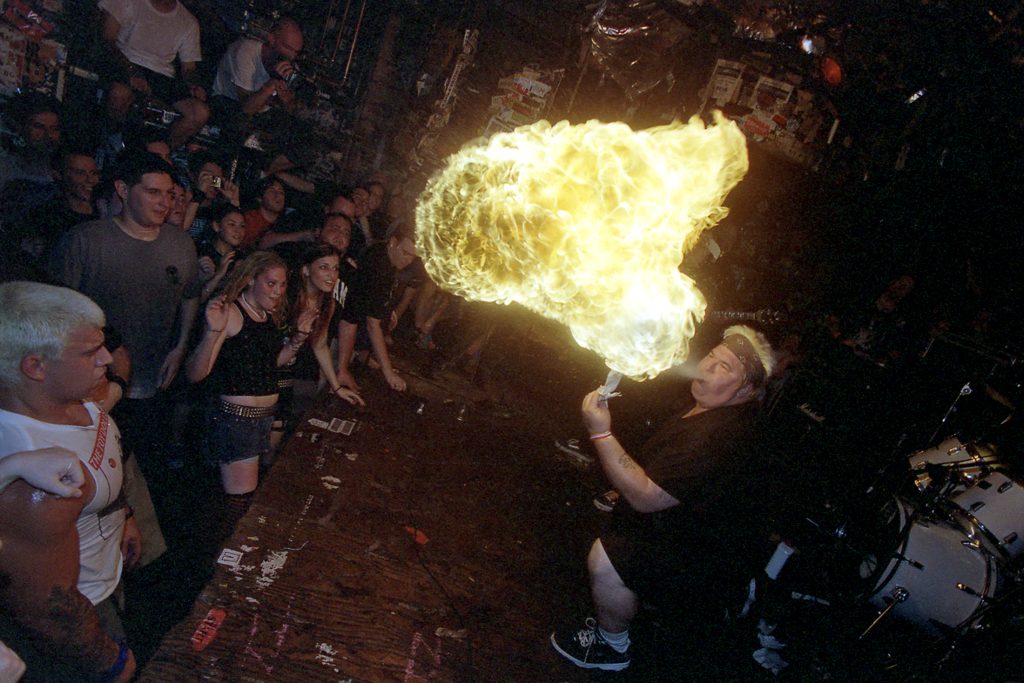
IE: What were your early days of shooting hardcore shows like?
Carl: I had a bunch of friends who got into hardcore at the same time, and my little sister would go to shows, so it didn’t feel awkward. I also went to a lot of shows that weren’t packed, so people would just start talking to me. Shooting helped. Five months after I started photographing, Gabe Walter from Whole 9 Yards Fanzine asked me for pictures. We met up at a pizza place by Generation Records in Manhattan. I brought all the 4×6 prints I could fit in my backpack. He took a giant stack and used them in Whole 9 Yards but also gave some to Rick Ta Life for Back Ta Basics Fanzine and for you and In Effect Fanzine, which led to me having a Crown Of Thornz picture on the cover of In Effect when I was in high school. There weren’t that many people shooting New York hardcore shows at the time, and things were starting to bubble up so I quickly had pictures in the first couple of SFT Records releases and was regularly in zines. I was thrilled to be part of things.
IE: Just recently I found out that you now have a book out featuring a specific time period of your photographic work. Can you tell us how the idea for the book came about and why you kept it time-specific for the years 2013-2019?
Carl: I always wanted to do an art book that happened to be of hardcore and wrestling, rather than a straight forward documentation of either scene. So, around 2013, I was between art projects and had been shooting shows and thought I would take a stab at making the thing I did for fun my art. I tried to shoot more of the sidelines, I worked harder to make portraits of people, photograph the spaces shows were in, and all the odd little details. Most of all I tried to figure out what hardcore and wrestling meant to me. Lockdown happened, and I had free time, so I saved my Covid money and spent a great deal of time printing and editing work. By 2019, I felt I had a body of work that made sense, with some money to publish a book, and it ended up taking me the last seven years to finish it.
IE: The name of the book is “Men”, a title that to me doesn’t suggest “hardcore/wrestling photography book.” Can you tell us how you came up with this title?
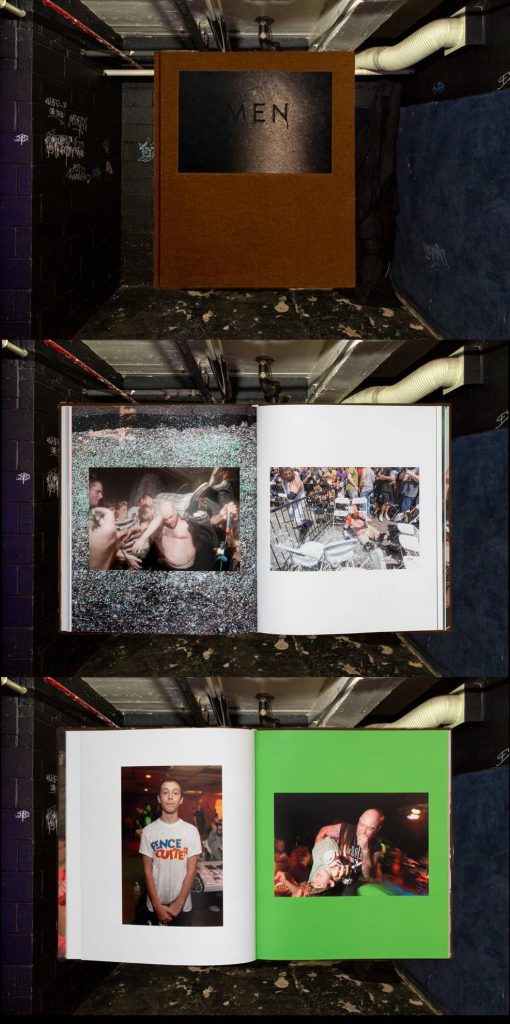
Carl: I am bad at titles. In organizing my own files, I use something practical, if not dumb, as the title. The work for this book ended up being about masculinity and my own feelings about it, so I had just labelled the folder of the work, “Men”. I had that picture that ended up on the cover and liked that the cover’s only text was in the picture. I did have a zine come out earlier in the project called “Not Just Boys Fun” with a pink and baby blue cover, but “Men” seemed a little more serious and direct.
IE: What can people expect from the book and now that it is done and out are there any things you wish you could go back and have a do over with?
Carl: The book is 94 pages of pictures of hardcore and indie wrestling but leaning more on portraits and still life’s than just bands playing or people wrestling. There is a nice clothbound hardcover, which I always wanted in a book of my work. I am proud of how it came out, but due to some miscommunication with the printer, there is an extra white page at the start and finish of the book, so I would change that. The image list in the back in the final layout is a touch high on the page, and I don’t love the layout of the image list. Not sure how I would make it better; it is just the limit of my graphic design abilities. The book is very much a DIY production. Waal-Bought Press, who published the book, was run by a friend of mine, Jason Wurm. He published an early book of mine, and we collaborated on a book of Joe Lawton’s photographs. He took a step back and now Waal-Bought Press is just me. So, I published the book, it was printed by Conveyor. They publish their own books but also have a high-end print-on-demand service that I used. There are 100 copies, and it cost all in, a little over $55.00 a book to make. CLICK HERE FOR MORE INFO
IE: Having known you and your work within the hardcore scene for many years it is easy for me to overlook the fact that you do essentially the same thing within the world of underground wrestling. Can you take us through our earlier question again about when you first started going to these events and when you started shooting them?
Carl: I had gone to watch indie wrestling here and there over the years, just being a wrestling fan. In the back of my head, it always seemed like something that might make for a good photography project. I started going in earnest because Pat Gerity who does RTF Records was booking indie wrestling and combining it with hardcore bands playing, so coming to shoot an RTF Wrestling show felt natural. I was there to shoot the bands but also got to shoot wrestling. A lot of the crowd were the same people from hardcore shows, which made the transition easier. Through RTF Wrestling, I met Jeff Cannonball who sang in Black Kites and played bass in Altered Boys. He was also just getting going as an indie wrestler. I started photographing the shows he was wrestling for Jersey Championship Wrestling. I got invited to shoot by a wrestler, Danny DeManto who was part of putting on JCW shows, so I got a little more access. Wrestling there is certainly more of a separation between wrestler and audience to keep up the illusion. But just like hardcore, the more you are around, the more people are comfortable with you. I was also generally shooting small wrestling shows, so people were generally happy to have someone photographing.
TURNSTILE IN BALTIMORE MARYLAND SEPTEMBER 1, 2019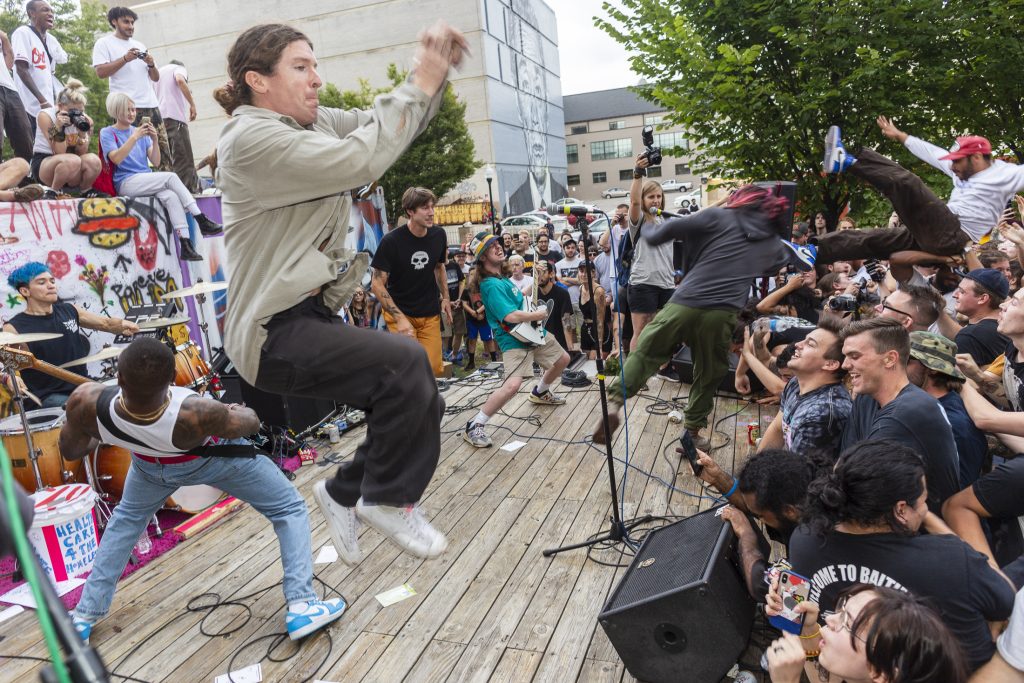
IE: What are some of the similarities and what are some of the major differences when shooting a hardcore show versus a wrestling event?
Carl: “This stage is your stage” isn’t a thing in wrestling… wrestlers are playing a character and to keep up that illusion they are less welcoming to outsiders. It is just an old culture of a separation of wrestlers from the audience, so it is a little less welcoming to photograph. Crowd-wise similar to hardcore, but like ten percent more awkward.
IE: Over the years you have had to put yourself in harm’s way to shoot the amount of bands you have shot. Even if your style as a photographer is to stand on the side of the stage or on the stage, a flying boot, elbow or full human can land on you when you least expect it. What have been some of the more dangerous situations that you have encountered while shooting?
Carl: Well, literally dangerous, and I’ll be vague so as not to get anyone or myself in trouble. I was at CBGB’s when a notorious 90’s NYHC person got jumped for dancing hard by a group of pop-punk kids. Without thinking, I took a picture of the melee. He disappeared to the back for a minute and then he came running back out across the stage at me. I was sure he was coming to kill me for photographing, but one of the pop punk kids was standing next to me and he smashed a glass Snapple bottle on the kid’s face. Then he walked to the front of the stage, lifted his shirt to reveal a gun and announced that he and his friends that he associated with, were not to be messed with. Wrestling-wise I unintentionally got hit by a garbage can, which didn’t hurt, and got sprayed by a fire extinguisher, which was very dry and a little hard to breathe right after. But wrestling violence, even being close to it seemed so controlled that I never felt in danger. While shooting, and as you mentioned I do stick to the side of the stage especially as I get older, so nothing too crazy has happened to me. I guess during Madball’s “Set It Off” record release at CBGB’s, I was not on stage, and Freddy Madball did a backflip right into me, breaking the UV filter of my lens (a cheap protective piece of glass) and drove the camera into my face busting me open, under my eye.
CHRIS B FROM EVERYBODY GETS HURT. CONTINENTAL, NYC. FEBRUARY 8, 2000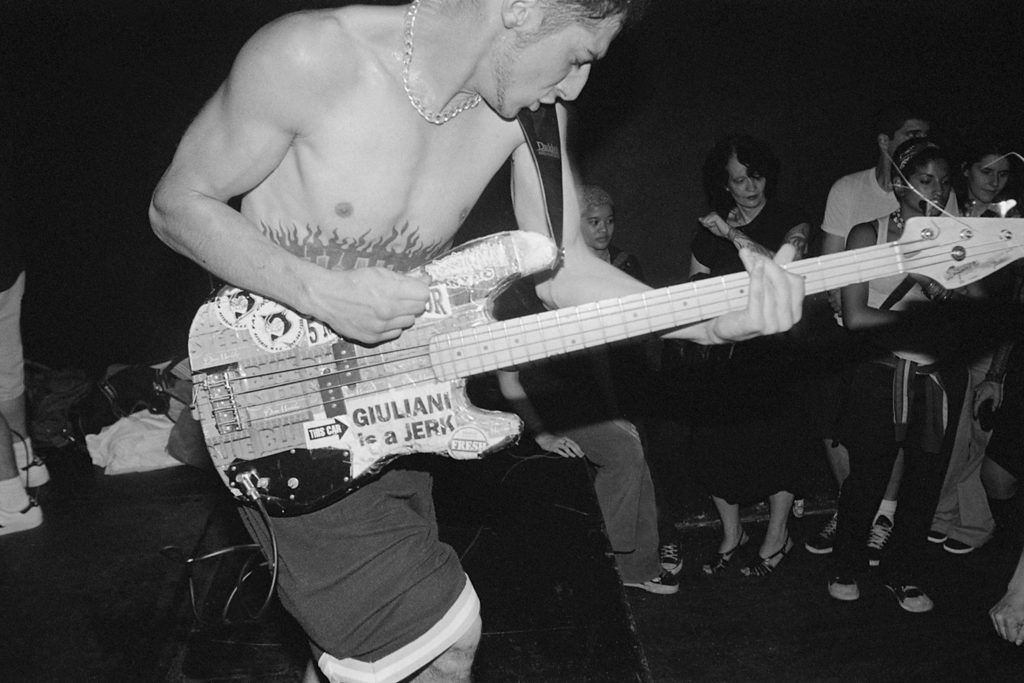
IE: Worst injury you have ever sustained while shooting an event?
Carl: CBGB’s in the 2000’s, I forget the show, but while on stage a mic stand got driven at me, and I tried to stop it with my hand, and it bent my thumb back to my wrist. It went numb but didn’t hurt until I got home after the show. It swelled up to the size of a softball, amazingly enough it was just a severe strain. But knock on wood, nothing too bad.
IE: I feel like I can almost immediately pick a Carl Gunhouse photo out of a group of random photos as you have a specific style that relies heavily on you being in the moment. Where others may have way more high end equipment, I feel that your expertise lies within knowing the landscape of the scenes you shoot. What do you currently shoot with and is it much different than what you were shooting with say 10 years back, and even 20 years back?
Carl: Well, thank you and spot on. I think ninety percent of what I do is finding a good place to stand. Never been much of a gear head. I might have shot the last thirty years of shows on like four cameras. All were the cheapest end of a professional 35mm camera with auto focus. I shot on shutter priority, where I am adjusting the shutter speed and the camera is automatically setting the aperture. I now shoot a Canon R5 Mark II. It is probably the fanciest camera I have shot with. I generally shoot them until they start falling apart and this was the first new camera I had bought in a decade, so I thought I could treat myself.
TONY DEPPEN. ON POINT WRESTLING. WILLIAMSTOWN, NJ. JANUARY 2, 2016 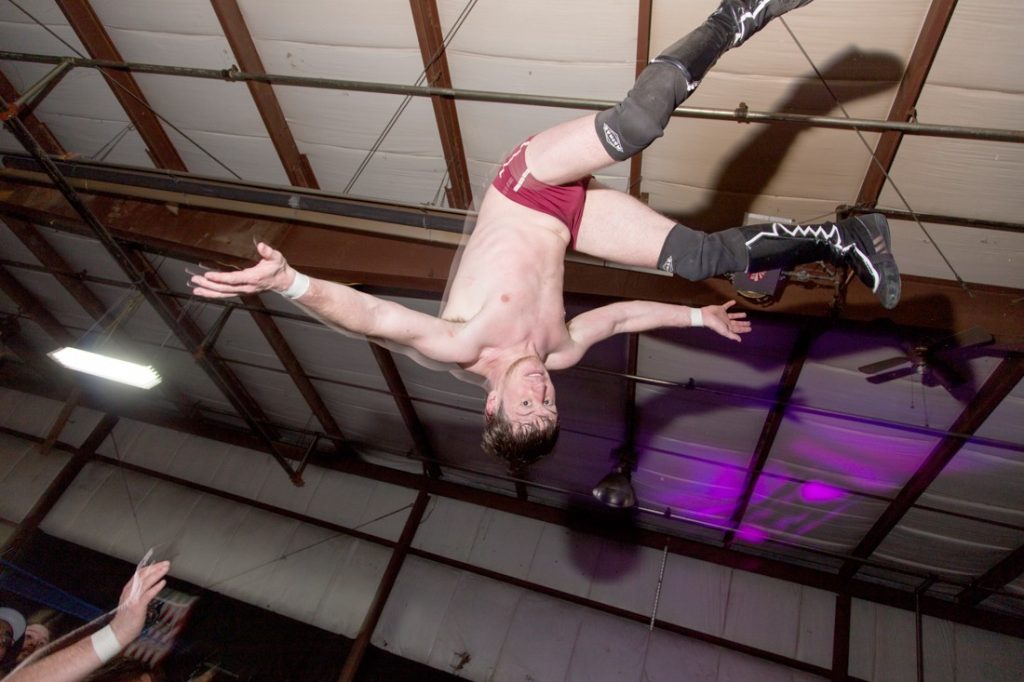
IE: Do you have a preference for a type of venue and type of show to shoot? Over the years I have seen you way too many times at small DIY venues or “ask a punk” type venues on a weeknight with full lineups of bands with nothing more than a demo out.
Carl: I think Gold Sounds in Brooklyn is perfect. The stage is like three or four feet high and not too long and the action is condensed into a small space. In a small room, even if it isn’t packed, it feels like a lot of people are there. Generally, I am trying to photograph the interaction between the crowd and band, so I tend to prefer small room stuff. I never had a lot of interest in shooting in a big room or with a barricade. I also don’t love the stress of getting access, so I try to stick to shooting stuff where I can just show up and photograph without worrying if I am on a list or if security is going to kick me off stage. I also love Cinco De Mayo in New Jersey. I’d be more than happy if all hardcore shows were on the floor of a small Mexican restaurant with good food.
TOP LEFT: BREAKDOWN CBGB’S, TOP RIGHT: JAMEY JASTA HATEBREED STUDIO ONE, NEWARK, NJ 1995, BOTTOM LEFT: NIGHT BIRDS, WARREN NJ, 2014, BOTTOM RIGHT: AARON BEDARD OF BANE, MANVILLE NJ 2000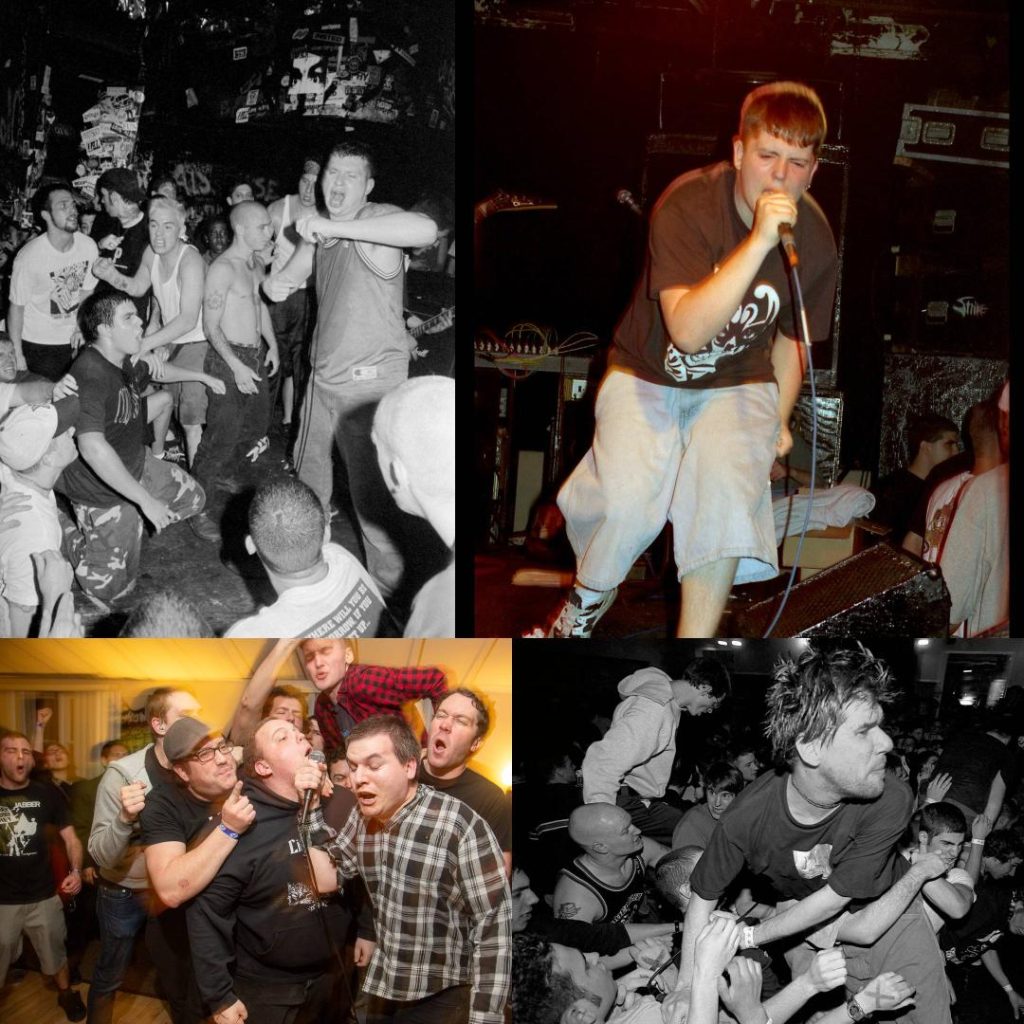
IE: Past or present what are 5 places you love/loved to shoot at?
Carl: 1. CBGB’s… it had a short stage, good lights, the front corner of the stage angled out, so it was like you were floating over the crowd in front of the stage, just perfect. 2. Gold Sounds 3. Cinco De Mayo 4. Brooklyn Bazaar… stage wasn’t too high, had great lights and had bigger shows without any issue being on stage. With the two basement spaces which were floor shows but with good lighting. It was also a five minute walk from my front door. 5. Any New Brunswick, NJ basement… cramped, dark and hard not to take a good picture.
IE: What are some newer hardcore bands that you feel are doing good things?
Carl: Hard one, because it seems we are fully back into a demo core era, where bands are spawning every day. But on the new, new, end of things; Smashing Time, 100 Hour War, Just Look Around, Quiz, The Peace Corp, Living Proof, Runnin’ Hot, Top Of The World, and Shits Creek are all bands I’ve enjoyed as of late.
IE: Who are some of your favorite hardcore bands to shoot over the years and what about them makes them fun or easy to shoot?
Carl: Murphy’s Law at their best is violent and chaotic, where it feels like things can go wrong at any moment but at the same time feels good natured. And Blind Justice which is what I imagine Murphy’s Law was like in the 80’s, and if they were straight edge.
IE: What is your day job? Do you like it?
Carl: I am a college professor, who teaches photography, so I love it, flexible hours, and I get paid to talk to kids about photography, the kind of thing I would do if you got me going at a dinner party. It’s the best.
HAYWIRE UNDER THE WILLIAMSBURG BRIDGE, NYC OCTOBER 10, 2025 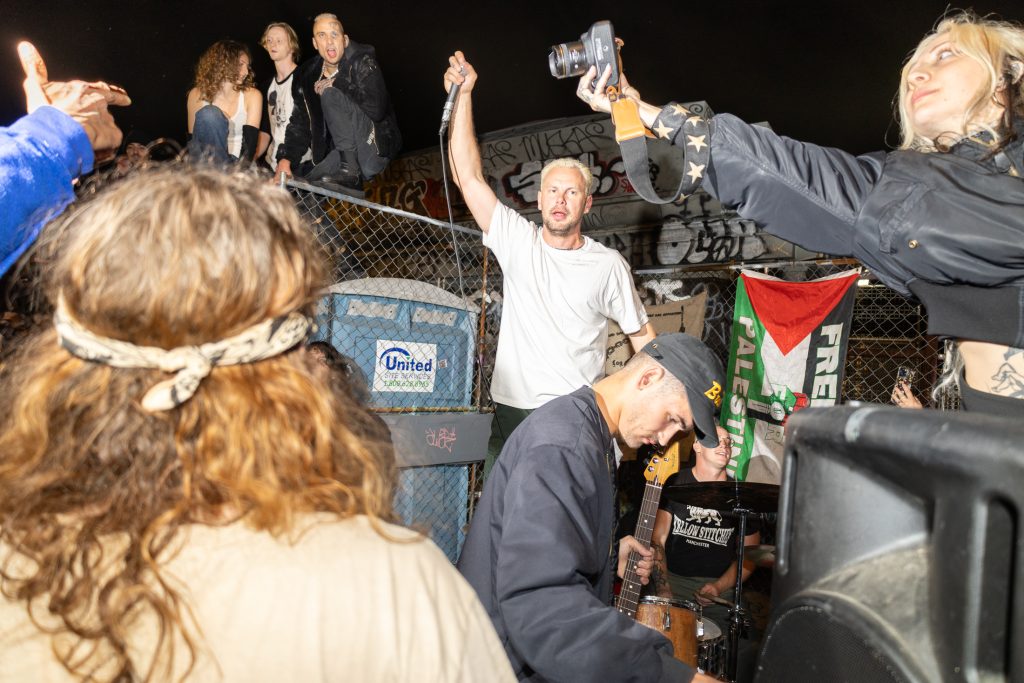
IE: When you think about the many years of you photographing hardcore shows and wrestling events what are some of the things you have done that bring you a sense of pride or accomplishment?
Carl: This book certainly, I am very proud it exists, and it is exactly what I always wanted a book of my work to be, so I am psyched. I also had work in an exhibition I got to help organize, of wrestling photographs that were shown at a no-ring death match, so as career highlights go, being able to have work up at a death match was very cool.
IE: Will wrap this up by asking you to give some sound advice for people just getting started with photographing these more extreme events which you have been doing for so long. Thank you for your time.
Carl: Yeah, get there early, find a spot you feel comfortable shooting from and don’t move the rest of the show. Have your shutter set to lower than your flashes sync speed and really that’s all there is to it.
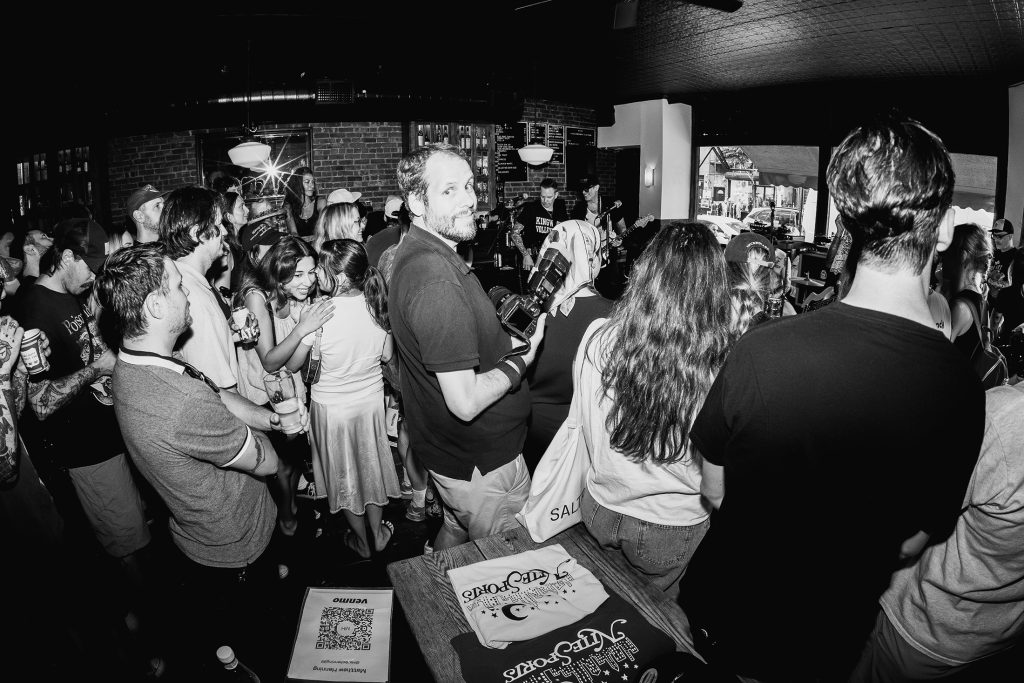
CARL SHOOTING NITE SPORTS IN BROOKLYN, NY IN 2025. PHOTO BY: STEVE LEVY